


Malicious prosecution is a civil claim against someone who wrongly brought criminal charges against you. In Georgia, you can sue if the charges lacked probable cause, were driven by malice, and ended in your favor. The Georgia General Assembly created this right in O.C.G.A. § 51-7-40, part of the State’s tort code. This guide will discuss the six elements that must be met, the evidence to be presented, the statute of limitations, and how damages are calculated. It also separates this claim from false arrest and abusive litigation. Missing even one element defeats the claim, so strong records matter.
What Is Malicious Prosecution in Georgia?
Georgia treats malicious prosecution as a tort, which is a civil wrong. According to O.C.G.A. § 51-7-40, a malicious and unfounded criminal action gives the defendant a right to file a lawsuit. Probable cause means reasonable grounds to believe the person committed the crime. The claim covers criminal cases only. Bad civil lawsuits fall under a separate abusive litigation law. False arrest differs because it focuses on the detention itself. Our overview of Georgia malicious prosecution claims offers more background.
The Six Elements Georgia Courts Require
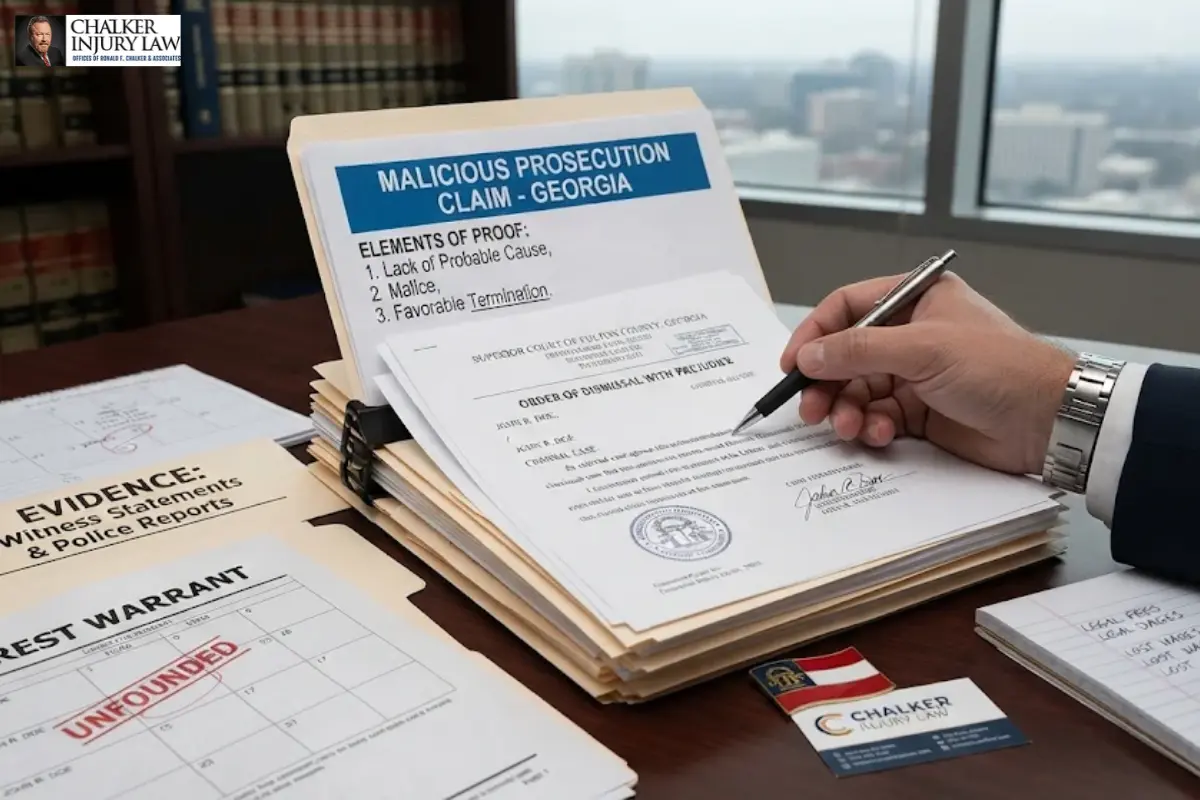
Georgia courts list six malicious prosecution elements. You must prove all six:
| Element | Plain-English Meaning |
|---|---|
| Criminal prosecution | A criminal case was brought against you. |
| Valid process | A warrant, accusation, or summons actually issued. |
| No probable cause | The accuser lacked reasonable grounds. |
| Malice | The accuser acted from spite or a wrongful motive. |
| Favorable termination | The criminal case ended in your favor. |
| Damage | The prosecution caused you harm. |
Georgia lets a jury infer malice from a total lack of probable cause. Probable cause, however, is a complete defense.
How to Prove Your Claim in Court
A malicious prosecution lawsuit depends on records from the criminal case. Georgia allows evidence from the earlier prosecution in the civil claim. Useful proof includes:
- The warrant, accusation, or summons
- Court records showing dismissal or acquittal
- Police reports and witness statements
- Messages that reveal the accuser’s motive
Georgia courts call the lack of probable cause the heart of the claim. Many claims involve private accusers, such as a retailer or a former partner. The accuser must have instigated the prosecution.
The Two-Year Filing Deadline
A malicious prosecution lawsuit must be filed within two years after the end of the criminal case in your favor. O.C.G.A. § 9-3-33 provides a two-year statute of limitations. Under Georgia Supreme Court precedent, a claim does not accrue until a criminal proceeding is terminated. A dismissal that allows the State to bring charges again may not be considered a favorable outcome. Count the two years from the last decision that ended the proceeding. Save that decision. Review Georgia’s personal injury filing deadlines to avoid costly mistakes. Missing the deadline bars the claim, no matter how strong your evidence.
What You Can Recover
Malicious prosecution damages are not just for your actual loss. O.C.G.A. § 51-7-47 says recovery depends on the circumstances of each case. The jury determines the amount based on its conscience. This may include:
- Legal fees spent defending the criminal charge
- Lost wages and lost time
- Emotional distress and harm to your reputation
- Punitive damages for willful misconduct
You will need to prove all your claims, so make sure you have your receipts, pay stubs, and billing statements. Jurors also weigh the parties’ circumstances. Georgia has no set formula, and each jury evaluates damages on its own. Georgia has no reliable average settlement for malicious prosecution. The case value depends on the charge, detention period, lost wages, and evidence of malice. Treat any published average without a cited source with caution.
Records to Gather First
A skilled malicious prosecution attorney will ask for these items at the first meeting:
- The charging documents and any warrant
- The dismissal or acquittal order
- Names of the accuser and witnesses
- Receipts, photos, or messages that support your side
Protect Your Rights After a Wrongful Prosecution
To prove this case, you must have proof of the six elements, a favorable resolution, and timely filing. Since malicious prosecution cases may fail due to probable cause, make sure that all documentation is done on time. Get your court documents, note down the important dates, and keep all the messages related to the charges. Georgia gives you two years after the charges end. Early preparation protects both your evidence and your filing deadline. Chalker Injury Law can review your records and explain your options with clarity and care. Call (678) 319-9991 or visit our contact page to schedule a free, confidential consultation today.
Frequently Asked Questions
How long do you have to sue for malicious prosecution in Georgia?
You have two years to sue for malicious prosecution in Georgia. The statute of limitations begins running from the date the criminal case is successfully terminated in your favor, not from the date that the charges were filed. O.C.G.A. § 9-3-33 provides for the two-year statute of limitations, and O.C.G.A. § 51-7-41 tolls the statute of limitations until the termination of the prosecution. A dismissal that lets the State refile may not start the clock. Save the final court order and track the date carefully.
Can you sue for malicious prosecution if the charges were dropped?
Yes, if the dismissal ends the prosecution in your favor. Georgia courts have treated a magistrate’s dismissal of an arrest warrant as a favorable termination. A dismissal that leaves the State free to refile charges may not qualify. You must still prove the other elements, including lack of probable cause and malice. Request the court’s dismissal order to see exactly how the case ended.
What is the difference between malicious prosecution and false arrest?
False arrest involves an unlawful detention, while malicious prosecution involves a criminal case brought without probable cause and with malice. Georgia provides separate remedies for false arrest and malicious prosecution under O.C.G.A. § 51-7-1 and § 51-7-40, respectively. The same event may serve as the basis for both cases. In addition, malicious prosecution necessitates that the criminal case be decided in your favor.
