


A defective product can injure you because of a damaged design, a manufacturing error, or a missing warning. Under Georgia law, you can sue the manufacturer under strict liability for up to two years after the incident. Georgia’s Product Liability Act allows people harmed by products to sue the manufacturer without proving negligence. This guide covers defects, liability, elements of proof, and other deadlines. It also discusses the evidence to preserve, damages, and when to consult a Georgia product liability attorney.
What Is a Defective Product Injury in Georgia?
Harm caused by an item that was unsafe when sold can support a legal claim. Georgia law covers new personal property that is not reasonably suited to its intended use. Courts group these problems into three categories.
| Defect Type | What Went Wrong | Example |
|---|---|---|
| Design defect | The design is unsafe | A space heater that tips over |
| Manufacturing defect | A production error makes one unit unsafe | A tire with a weak internal bond |
| Failure to warn | Risks or instructions are missing | A cleaner with no ventilation warning |
Any one of these flaws can support a defective product claim if it caused your harm.
Who Can Be Held Liable for a Dangerous Product?
Under O.C.G.A. § 51-1-11(b)(1), manufacturers face strict liability for unsafe products. Strict liability means you do not need to prove the company was careless. You only show the product was defective and caused your harm. Negligence claims can also reach designers, assemblers, and some sellers.
It is not necessary for you to be the purchaser of the product. A gift recipient, family member, or bystander can bring a defective product lawsuit when the item injures them. Georgia law protects certain sellers who did not make the product. Identifying the manufacturer early therefore matters.
How to Prove Your Case
In Georgia, the following four elements must be proven:
- The product was defective when it left the manufacturer’s control.
- You used it as intended or in a foreseeable way.
- The defect directly caused your injury.
- You suffered from actual damages, such as medical bills or lost income.
Engineers and physicians often serve as expert witnesses in a defective product injury case. They link the defect to your harm and explain it to a jury.
What Evidence Should You Keep?
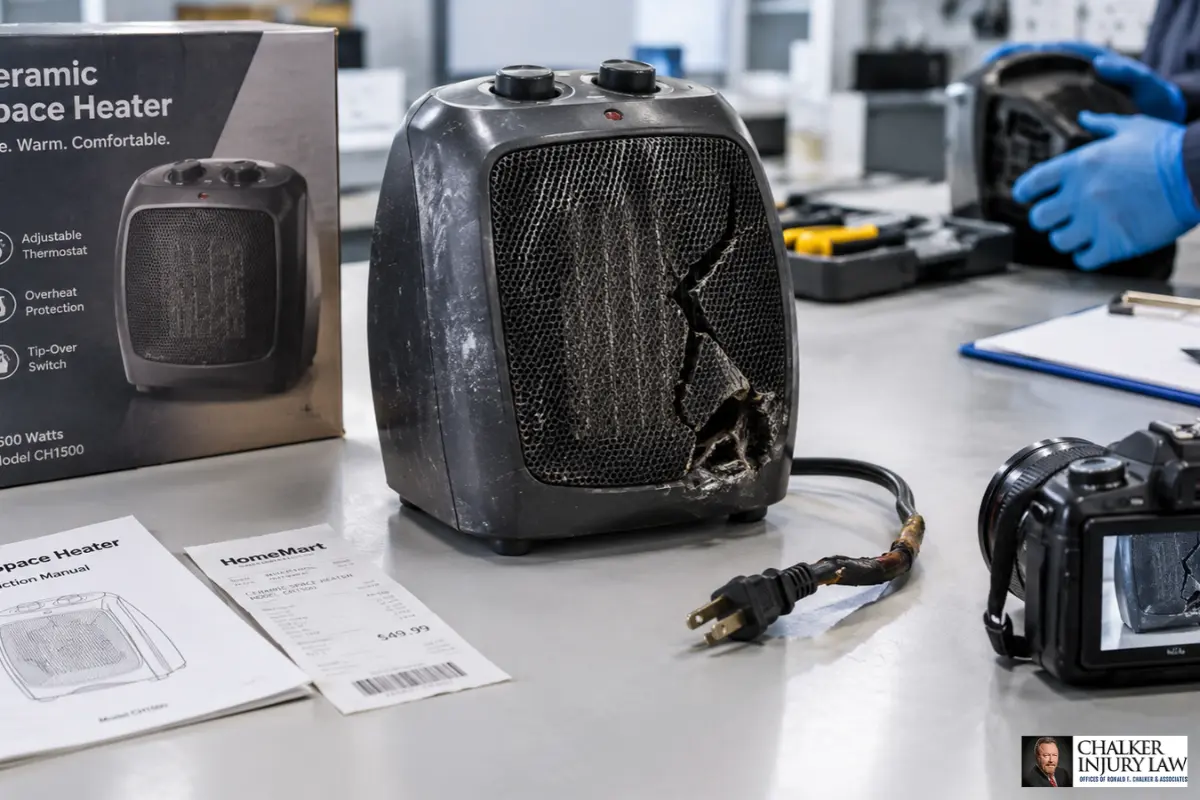
Preserve the product, even if it is broken. Packaging, manuals, invoices, and pictures of the injury need to be kept safe. Medical documentation and lost work hours should also be documented. Do not repair or throw away the item.
You can also report unsafe items to the U.S. Consumer Product Safety Commission at SaferProducts.gov. Those public reports may show patterns of similar injuries that strengthen a defective product claim.
Georgia Deadlines for Filing Suit
Georgia sets two separate deadlines, and each works differently.
- Statute of limitations: two years from the date of injury as per O.C.G.A. § 9-3-33.
- Statute of repose: Ten years from the first sale for use or consumption, as per O.C.G.A. § 51-1-11(b)(2), applicable to strict liability actions against the manufacturer.
A statute of repose is an absolute deadline that can preclude a strict liability claim regardless of the injury date. Failure to comply with either deadline will render the defective product claim ineffective.
Georgia also applies comparative fault under O.C.G.A. § 51-12-33. Your award shrinks by your share of blame. You can recover only if you are less than 50% at fault.
Compensation and Severe Injuries
Injured people may recover medical expenses, lost wages, pain and suffering, and loss of enjoyment of life. Some failures cause catastrophic harm. Faulty airbags or tires may lead to an auto accident claim. Other failures cause brain and spinal cord injuries or wrongful death.
Each loss needs documentation. must be documented. Medical bills, work records, and other treatment records are used as proof for a defective product injury claim. Keep copies of every bill and statement. Your attorney can use them to calculate current and future losses.
Why Hire a Product Liability Lawyer in Georgia?
The companies will usually have many lawyers, and they will also question whether the defect was actually present. Insurance companies may claim you used the product improperly or ignored the warning signs. Product cases also require technical proof about design, materials, and testing standards. An attorney can trace the supply chain to find every responsible company.
A defective product attorney can also gather evidence, consult engineers, and negotiate on your behalf. Early involvement also helps preserve the product and witness accounts before they disappear. Your attorney can arrange independent testing of the item. Our product liability attorneys work on contingency, so you pay nothing upfront. We serve Alpharetta, Roswell, Johns Creek, and nearby North Metro Atlanta communities.
Protect Your Rights After a Dangerous Product Injury
Georgia provides effective legal recourse to consumers who have been injured, but the time limit is tight. If you have been injured by a defective product, keep the product and report the loss before it is too late. Chalker Injury Law has served injury victims across North Metro Atlanta for over 35 years. Our team will review your situation, explain your options, and answer your questions. Early action protects both your evidence and your right to compensation. Call (678) 319-9991 or visit the contact page to schedule a free consultation.
Frequently Asked Questions
What is the statute of limitations for a product liability claim in Georgia?
You have two years from the time you were injured to file a product liability claim in Georgia pursuant to O.C.G.A. § 9-3-33. There is also a statute of repose in Georgia that bars any strict liability claims filed after ten years from the initial sale of the product. Because of the deadlines set forth above, you should consult with an attorney immediately. Limited exceptions, such as tolling for minors, may apply.
Can I sue if I did not buy the product that hurt me?
Yes, you can still file a lawsuit despite the fact that you did not purchase the product. According to Georgia statute O.C.G.A. § 51-1-11(a), privity of contract is not necessary for a tort action. Privity means a direct contract between you and the seller. Gift recipients, family members, and bystanders may all bring claims when a product injures them. You must still prove the product was defective and caused your harm.
What if I was partly at fault for my product injury?
You can still recover if you are less than 50% at fault. Under O.C.G.A. § 51-12-33, a court reduces your award by your percentage of responsibility. For example, 20% fault on $100,000 in damages leaves $80,000. If you are 50% or more at fault, Georgia law bars recovery. Ignoring warnings or misusing the item are common fault arguments. Courts weigh the evidence to assign each party a percentage.
What damages can I recover from a product liability claim in Georgia?
Economic and non-economic damages are available. Economic damages include medical bills and loss of income. Non-economic damages include pain and suffering, mental distress, and loss of enjoyment of life. Family members may also pursue wrongful death damages after a fatal injury. The value depends on injury severity, medical costs, and evidence of the defect. A lawyer can review your specific losses.
